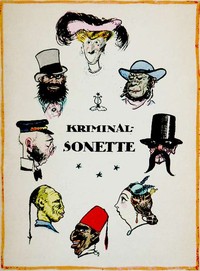
Kriminal-Sonette by Friedrich Eisenlohr, Livingstone Hahn, and Ludwig Rubiner
Published in 1913, Kriminal-Sonette is a strange and fascinating beast. It's a collection of poems, each one a traditional 14-line sonnet, but the subject matter is anything but traditional. Instead of love or nature, these poems focus on thieves, murderers, prostitutes, detectives, and the shadowy urban landscape they inhabit. The book is a collaborative effort, with each of the three authors contributing their own criminal vignettes.
The Story
There isn't a single narrative thread. Think of it more like walking through a gallery of grim portraits. One sonnet might give you the inner monologue of a burglar mid-break-in, all jangling nerves and focused intent. The next might describe a crime scene with cold, detached observation. Another could inhabit the mind of a detective who's seen too much. The 'story' is the cumulative effect—a mosaic of early 20th-century anxiety, poverty, and moral ambiguity. The city itself is a character, a place of fog, electric lights, and hidden violence.
Why You Should Read It
This book grabbed me because of its sheer audacity. Taking the sonnet—a form linked to Shakespeare and Petrarch—and using it to talk about gangsters and police raids is a brilliant act of literary punk. It makes you read differently. You're looking for clues in the rhyme scheme, feeling the tension between the strict form and the chaotic subject. The poets don't judge their characters outright; they present them, often with a shocking intimacy. It forces you to confront the humanity of people society has labeled as monsters. Reading it feels like uncovering a secret history of literature, one where poets were obsessed with tabloid headlines and the pulse of the modern metropolis.
Final Verdict
This isn't for everyone. If you want a fast-paced thriller, look elsewhere. But if you're a poetry fan curious about its edgier history, or someone who loves experimental German Expressionist art and literature, this is a must-read. It's also perfect for true crime enthusiasts who want to see how the genre was being dissected by artists over a century ago. Kriminal-Sonette is a short, sharp shock from the past that still feels surprisingly modern in its gritty preoccupations.
This publication is available for unrestricted use. It serves as a testament to our shared literary heritage.