eBooks
99 Books foundAbout the UQAWE Public Domain Literature Library
The UQAWE Public Domain Literature Library offers a curated collection of 99 public-domain texts, each accompanied by an editorial note that guides readers toward meaningful engagement. The Catalogue maintenance uses source records and bibliographic context.
Browsing the Catalogue
The catalogue currently contains 4 active subject categories: Political Thought, Government, Democracy Rights, and International Affairs. Categories are used as browsing aids and may overlap where a work reasonably fits more than one subject. Within this category, each book has its own page accessible via a unique URL. The archive page provides a complete list of titles with links to individual book records.
What a Book Record Contains
Every book record includes the title, author(s), digital source (Project Gutenberg), keywords, a target-reader description, and an editorial catalogue note. The catalogue note offers context, highlights structural features, and suggests entry points for reading. Keywords indicate subject coverage, while the target-reader field clarifies the intended audience.
Source Attribution
All texts in the library are sourced from Project Gutenberg, a trusted repository of public-domain works. Each book record acknowledges this provenance. the catalogue project has prepared original catalogue notes for every title; no third-party content is included.
Three Practical Reading Paths
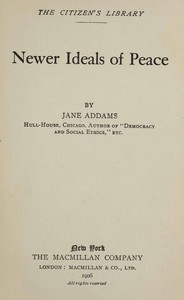
- Foundational Political Theory: Begin with John Locke's Second Treatise of Government (ID 235) for the principles of consent and property, then Bertrand Russell's Political Ideals (ID 231) for a modern critique, and conclude with Jane Addams' Newer ideals of peace (ID 303) for a progressive vision of democracy.
- Historical Case Studies: Start with Machiavelli's History of Florence (ID 224) for Renaissance politics, move to Jefferson Davis's The Rise and Fall of the Confederate Government, Volume 2 (ID 281) for Civil War analysis, and finish with Arthur Ransome's The Crisis in Russia (ID 217) for early Soviet governance.
- Reference and Data: Explore the CIA World Factbook editions (IDs 213, 214, 215, 218, 219, 223) for structured Cold War-era geopolitical data, then consult A Compilation of the Messages and Papers of the Presidents volumes (e.g., ID 239) for primary-source presidential documents.
Categories as Navigation Aids
The single category Government serves as a finding aid rather than a definitive literary judgment. It groups works by thematic focus, but readers may encounter overlaps with history, biography, or philosophy. The category is intentionally broad to encourage cross‑period and cross‑regional comparisons.
Bibliographic dates and catalogue measurements
The catalogue distinguishes the Project Gutenberg digital release from a work’s original or first publication. Project Gutenberg is identified as the digital source for the edition available here; its release year is therefore shown as Gutenberg Release Year, not as the work’s original publication year.
When an explicit first-publication or issue date can be supported directly by the title or issue information, it may be shown separately as First Publication Year. When that date cannot be confirmed, the catalogue displays Not confirmed rather than guessing a year.
Where the source text can be measured reliably, the catalogue may provide word count and estimated reading time. These measurements describe reading scope and are not quality rankings.
The current catalogue contains 4 active subject categories: Political Thought, Government, Democracy Rights, and International Affairs. Categories are browsing aids and may overlap where a work reasonably fits more than one subject.
- Featured
- Featured