
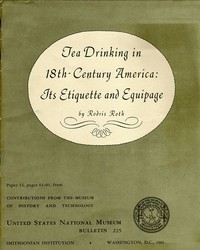
Tea Drinking in 18th-Century America: Its Etiquette and Equipage by Rodris Roth
Forget everything you think you know about tea in early America. Rodris Roth's book isn't just about the Boston Tea Party. It's about what happened before the protest, in countless parlors and dining rooms across the colonies.
The Story
This book walks us through the 18th-century American love affair with tea. It starts with how this expensive import became a must-have status symbol. Roth shows us the incredible effort it took to get tea leaves from China to a Philadelphia table. Then, she gets into the good stuff: the equipage. We learn about the specific pots, cups, saucers, sugar bowls, and even tiny spoons that made a proper tea set. This wasn't just stuff—it was a public display of your taste and wealth.
But the real heart of the story is the etiquette. Roth explains the precise rituals of serving and drinking tea. Who poured? Who got the first cup? How should you hold it? These rules were a way for colonists, especially women, to show they were refined and civilized, often trying to copy their British cousins. The book reveals how this daily ritual was a performance of social identity.
Why You Should Read It
What I loved most is how Roth makes history feel personal. You stop seeing a painting of people drinking tea and start seeing the strategy behind it. That fancy porcelain pot? A huge financial investment. The way a hostess served? A silent message about her family's place in society. It connects big ideas—like global trade, social climbing, and political tension—to the simple, tangible act of sharing a hot drink.
It completely reframes the Boston Tea Party. When you understand how central tea was to social life, destroying it becomes a much more powerful and personal act of rebellion. It wasn't just about tax; it was about rejecting a whole way of life.
Final Verdict
Perfect for history lovers who enjoy stories about everyday life, not just wars and treaties. If you've ever wondered how people actually lived in the past—what they bought, how they entertained, what they cared about—this book is a treasure. It's also great for anyone interested in material culture (the history of objects) or the quiet ways social change happens. The writing is clear and full of great details, making it an engaging read that will change how you look at your own coffee mug.
This publication is available for unrestricted use. You are welcome to share this with anyone.
Charles Wilson
1 year agoBased on the summary, I decided to read it and it provides a comprehensive overview perfect for everyone. Worth every second.
Linda Jones
1 year agoSurprisingly enough, the character development leaves a lasting impact. I learned so much from this.
Michael Hill
1 year agoFive stars!









Deborah Lopez
2 months agoSurprisingly enough, it manages to explain difficult concepts in plain English. Worth every second.