About 402 minutes
Virginia's Attitude Toward Slavery and Secession — Background and Themes
Government
92,294 recorded words. 7 minutes difference from this book's estimate.
View Gutenberg source #46026
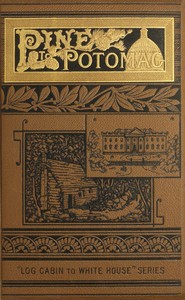
For Pine to Potomac — Key Ideas to Explore, the stored edition analysis reports 93,865 words, 6 hr 49 min estimated reading time, and 27 detected text sections.
The text analysis averages about 21.9 words per sentence, while the detected sections provide another way to judge how the source is divided.
Project Gutenberg metadata also associates the work with “Politicians -- United States -- Biography,” connecting these edition facts with the source record’s subject description.
Explore this collection
These alternatives are selected using recorded categories and estimated reading time.
About 402 minutes
Government
92,294 recorded words. 7 minutes difference from this book's estimate.
View Gutenberg source #46026About 400 minutes
Government
91,820 recorded words. 9 minutes difference from this book's estimate.
View Gutenberg source #28992About 428 minutes
Government
98,317 recorded words. 19 minutes difference from this book's estimate.
View Gutenberg source #39559Search stored excerpts and compare books → Choose by your preferences →
Choices use stored catalog measurements. Estimates vary with reading speed. A shared category is a catalog label, not a claim that two books have the same argument or literary quality.
Search reads excerpt text stored with this catalog and links to its associated Gutenberg record. The connection is stored in the site database; this tool does not recheck that every excerpt is word-for-word identical to that external record. Excerpt search does not cover every chapter and does not verify historical publication dates.
Catalog snapshot checked: 2026-09-26. Coverage: 99 public books, 99 available source excerpts.
Calculated from edition completeness, EPUB availability, text structure and catalogue metadata. Not a user rating.
Total of 100 points, scaled to a 2.5-5.0 range. Editions with an empty description or a missing EPUB file are not scored.
Public-domain source text
The source text is kept in the dedicated reader, separate from this catalogue record and its commentary.
Cressey opens with an extended metaphor: 'Mountains are the homes of giants—giants in brawn and giants in brain.' This rhetorical flourish sets the tone for a biography that treats Blaine as a natural force emerging from America's landscape. The author's diction is consistently elevated, with phrases like 'consciences unseared' and 'victory is their birthright' framing political success as moral inevitability. Cressey does not merely narrate events; he invests them with a providential quality, as when he describes Blaine's loyalty to Lincoln as beyond reproach, calling opposition 'unwise, cruel, and next to disloyalty.'
Cressey's introduction establishes a recurring pattern: great men are products of their native soil. He writes that 'the great men of America are the products of America,' and Blaine, coming from the pine forests of Maine to the Potomac, embodies this geographic determinism. The author uses natural imagery—mountains, streams, mists—to suggest that Blaine's character is elemental rather than cultivated. This choice of diction elevates Blaine above mere politician to a force of nature. Cressey's prose is deliberately oratorical, with parallel constructions and exclamatory sentences that mimic the stump speech. For example, he declares that such men 'bring consciences with them,—consciences unseared, into the battle of life.' The repetition of 'consciences' and the dash create a rhythmic emphasis that underscores moral purity. This rhetorical strategy aligns with the book's subtitle, which promises to trace Blaine from 'boyhood, youth, manhood, and public services,' suggesting a teleological arc from rustic origins to national prominence.
In recounting the 1864 Republican convention, Cressey adopts a defensive posture. He describes opposition to Lincoln as 'exceeding strange' and attacks those who 'could oppose a man so great and worthy as Abraham Lincoln.' The author's language is emotionally charged: he calls the opposition 'unwise, cruel, and next to disloyalty.' This is not neutral history but a partisan defense of Blaine's unwavering support for Lincoln. Cressey lists prominent delegates—Solomon Foote, John A. Andrew, Henry J. Raymond—to establish the convention's legitimacy and Blaine's company. He also contrasts Lincoln's 'proudly enthroned' status with the 'fever-heat' of radical dissent. The passage reveals Cressey's method: he uses Blaine's stance as a moral touchstone, judging other figures by their loyalty. The author's voice is that of a contemporary partisan, not a detached biographer. He assumes his reader shares his reverence for Lincoln and his disdain for the 'radical men of the nation' who met at Cleveland. This framing shapes the entire narrative, presenting Blaine's career as a series of principled stands against factionalism.
Cressey's vocabulary consistently reinforces a binary of virtue and error. Words like 'true,' 'good,' 'wise,' and 'faithful' recur, while opponents are 'false,' 'indolent,' or 'disloyal.' In describing Blaine's role, he uses phrases such as 'staunchest friends' and 'cannot look... with any respect.' The author avoids ambiguity; his judgments are absolute. This moral clarity extends to his description of the war itself: 'Rebels were still on the banks of the Rappahannock and the Tennessee.' The term 'Rebels' is a deliberate choice, invoking the Civil War lexicon of the Union. Cressey also employs a formal, almost biblical cadence: 'Whoever makes you proud that you are a man,—that you are an American citizen,—makes you feel that life is not only worth living, but that to live is joy and glory.' The dashes and repetition create a sermonic tone. This diction serves to align Blaine with a providential view of American history, where success is the natural reward of 'good, true soul that will work to win.' The author's language leaves little room for complexity, instead offering a hagiographic portrait that matches the 'Log Cabin to White House' series title.
The book's structure follows a clear trajectory from rural origins to national influence, as signaled by the title 'Pine to Potomac.' Cressey devotes separate sections to boyhood, youth, manhood, and public services, creating a linear, progressive narrative. This structure mirrors the 'Log Cabin to White House' series, implying that Blaine's rise is both typical and exemplary. The author reinforces this arc through repeated contrasts: the 'mountains' of the introduction versus the 'arena of the world's activities'; the 'consciences unseared' of youth versus the battles of political life. Cressey also includes a sketch of Gen. John A. Logan, suggesting a parallel heroic journey. The prose is dense with lists of names and events, but the author's interpretive voice remains dominant. He does not let facts speak for themselves; he frames them within a moral and nationalistic framework. For instance, his description of the 1864 convention is less about political maneuvering than about loyalty and character. This structural choice—emphasizing moral development over policy details—shapes the reader's understanding of Blaine as a man of principle rather than a pragmatic politician.
Cressey's biography is best approached as a period artifact of Gilded Age political culture. Its value lies not in objective history but in its vivid demonstration of how a partisan author used diction, metaphor, and structure to construct a heroic public figure. Readers attentive to Cressey's rhetorical choices—his mountain imagery, moral binaries, and defensive tone—will gain insight into the era's political mythology and the literary conventions of campaign biography.
There’s something touching in how Pine to Potomac lingers on Cressey’s mountainous language—how he tried to make Blaine monumental. It reminded me of old biographies that strain so hard toward grandeur, they nearly break. I found myself thinking of Sheridan’s memoirs, that same earnest, elaborate effort to frame a life. Memoirs of the Life of the Rt. Hon. Richard Brinsley Sheridan — Volume 02 — Text and Context carries that same quiet, wistful distance. Strange, how we hear their voices through all that rhetoric.
Save your reaction, strongest insight, and memorable passage.









