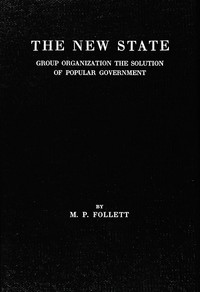
Mary Parker Follett opens The New State by diagnosing political stagnation, labor conflict, and international war as symptoms of a single failure: we have not learned how to live together. Her proposed remedy is not a new constitution or a set of rights but a new principle of association—group organization. The book, published in 1918, systematically builds a case for replacing crowd-based politics with small, integrated groups that generate collective purpose through genuine discussion. Follett distinguishes sharply between the crowd, which she sees as a source of suggestion and conformity, and the group, which she treats as the unit of creative social process.
Discussion vs. Debate
Follett devotes considerable attention to what she calls “genuine discussion,” contrasting it with the practices of debating societies, which she condemns outright. In debating, she writes, “the object is always to win, it is never to discover the truth.” Participants take sides, pool arguments, and reject opposing views without examination. This, she argues, is “excellent training for our present party politics” but “wretched preparation for the kind of politics we wish to see in America.” Genuine discussion, by contrast, aims at interpermeation—the merging of perspectives into a collective idea, feeling, and will. Follett insists that such discussion cannot occur in a crowd; it requires a genuine group, one that is organized and continuous. Her critique extends to so-called discussion societies that serve only as “a steam-valve for the hot-headed,” releasing tension without producing constructive action.
Neighborhood as Political Unit
Follett grounds her theory in the neighborhood group, which she calls “the basis of politics.” She warns against treating neighborhood organization as merely a method for getting things done—such as securing a playground. If that is the goal, she argues, the effort may succeed temporarily but will not create lasting capacity for concerted action. The real purpose is to “bring about a different mental life,” one characterized by an open, flexible, cooperative mind. Follett illustrates this with a contrast: when a playground is wanted, a neighborhood may rally, but without ongoing organization the cohesion dissipates. The deeper aim is to evolve “the kind of life, the way of thinking, within which these specific things will naturally have place.” She also cites Bernard Shaw’s remark that family life can be cut off from both society and solitude, using it to underscore the need for neighborhood associations that genuinely connect individuals to a larger social whole.
From Contract to Community
Follett’s vision extends beyond local groups to the structure of the state itself. She advocates for a “true federal state” built on both neighborhood and occupational groups, rejecting the sovereign state in favor of a service state. The table of contents reveals a progression from the group principle through critiques of traditional democracy—which she argues is not liberty, equality, majority rule, or crowd rule—to a detailed plan for group organization. The final part addresses the “dual aspect of the group”: a union of individuals and an individual in a larger union, culminating in a moral state and a world state. Throughout, Follett insists that the group process produces not merely agreement but a collective will that transcends individual preferences. Her language is precise and often combative: she calls the crowd fallacy a “popular delusion” and dismisses the majority principle as a political fallacy.
Readers should note that the excerpts provide only the introduction and a portion of the chapter on neighborhood organization. The book’s full argument—spanning four parts and eighteen chapters—develops concepts such as the collective idea, the collective feeling, and the collective will in greater detail. Follett’s later chapters on political pluralism, sovereignty, and the world state are not represented here. The excerpts do show, however, that her central concern is not institutional reform but a transformation in how people think and associate. Her critique of debating societies and her insistence on genuine discussion as a political method offer a concrete entry point into her larger system.
There’s something almost comforting in how Follett's The New State returns to me at odd moments—the idea that we might build a shared will from real talk, not shouting matches. It makes me think of Bertrand Russell’s quieter urgings in Political Ideals — Key Ideas to Explore, where the hope felt more like a hand extended in the dark. Both feel like old friends who never stopped believing in us.